If you are comparing Fairfield and Vacaville for your next industrial property, the best choice usually comes down to one practical question: do you want deeper existing warehouse inventory, or do you want a more specialized growth story? That can feel like a big call when rents, vacancy, and building types vary by submarket and product. This guide will help you sort through the differences, understand what each city tends to offer, and make a more confident decision for your next move. Let’s dive in.
Solano industrial market snapshot
Solano County’s industrial market in late 2025 looks softer than the tight conditions many owners and tenants saw in earlier years, but it is still active. Brokerage reporting showed vacancy around the mid-8% range countywide, with average direct asking rents generally below $1.00 per square foot per month on a triple net basis.
That broader average is helpful, but it does not tell the full story. Market performance varies by building type, and that matters when you are comparing Fairfield and Vacaville. In early 2025, warehouse vacancy was reported at 9.8%, general industrial vacancy at 3.5%, and R&D vacancy at 17.2%.
Another key point is supply. Colliers reported no industrial space under construction countywide in Q4 2025. In practical terms, that means many users and investors are choosing from existing inventory instead of waiting for a major wave of new deliveries.
Fairfield at a glance
Fairfield stands out as the county’s more established warehouse and distribution hub. It sits along I-80 and I-680 and also points to access through two rail lines, which supports its role as a logistics-oriented market.
The city also promotes quick access to ports in Oakland, West Sacramento, Benicia, and Richmond. For users who care about goods movement, that transportation profile can be a major advantage.
Fairfield’s industrial base is also broad. City information highlights manufacturing, light industry, back office, distribution, and R&D, with major employers and businesses that include Travis Air Force Base, Jelly Belly, Clorox, Primal Pet Foods, Owens Illinois, and FedEx Ground.
What Fairfield inventory looks like
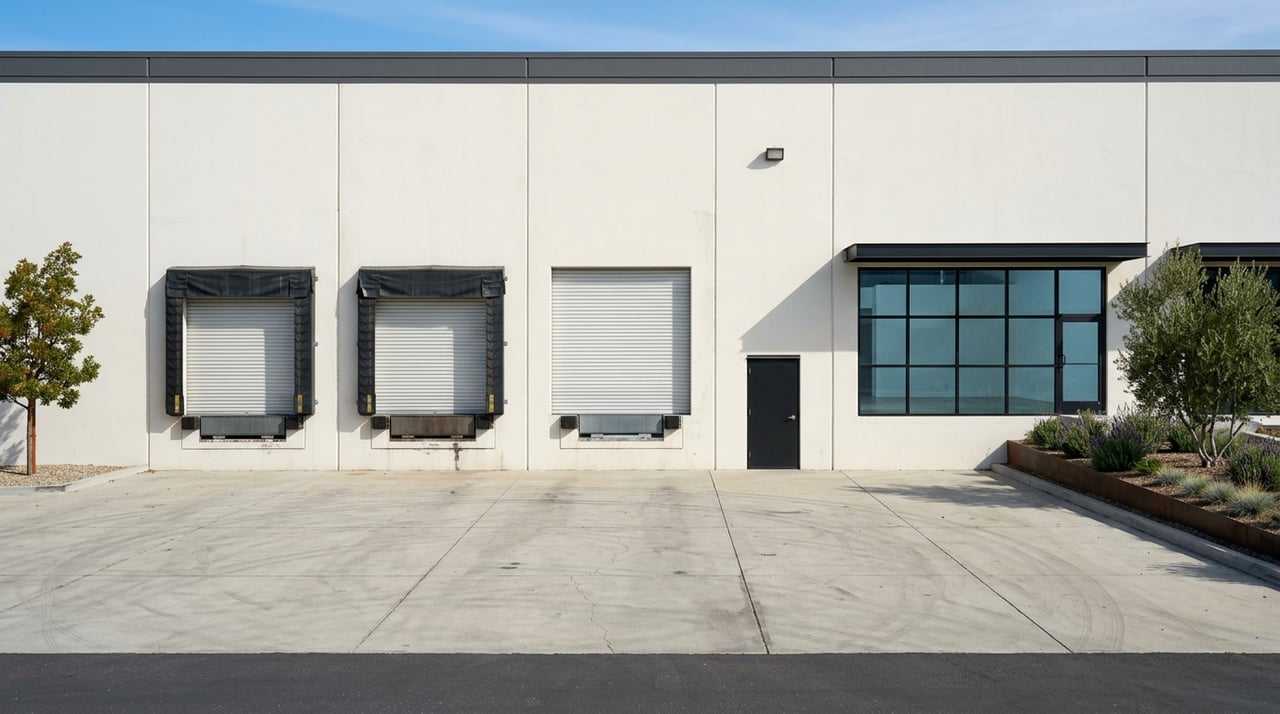
Fairfield appears to offer a deeper pool of existing industrial product than many nearby options. The city says it has more than 2.6 million square feet of available commercial and industrial space and markets seven industrial and business parks.
Those parks include Busch Corporate Center, Fairfield Corporate Commons, Green Valley Corporate Park, Solano Business Center, South Cordelia Industrial Park, and Tolenas Industrial Park. For a buyer, tenant, or investor, that usually means more existing choices across established locations.
Brokerage data reinforces Fairfield’s scale. In Q4 2025, Colliers tracked Fairfield at 16.7 million square feet of industrial inventory, making it the largest tracked submarket in the broader area, with total vacancy of 10.4% and an average direct asking rate of $0.92 per square foot NNN.
Current listing snapshots also show a practical middle-market range for many properties. Examples included spaces priced from about $7.80 to $16.80 per square foot per year, along with larger blocks offered at rates upon request.
When Fairfield makes the most sense
Fairfield tends to be the better fit when your priority is conventional warehouse or logistics space. It also looks strong for users who want a larger network of established industrial parks and a market with an active manufacturing and distribution base already in place.
Based on city positioning, inventory patterns, and recent lease activity, Fairfield may be especially relevant if you are evaluating:
- Distribution facilities
- Warehouse operations
- Food and beverage uses
- General manufacturing
- Multi-tenant industrial investment opportunities
If your decision depends on finding built space now rather than betting on future development, Fairfield deserves close attention.
Vacaville at a glance
Vacaville offers a different industrial story. It markets itself as centrally located on I-80 near I-505, with access to rail, deep-water ports, and airports in Sacramento, Oakland, and San Francisco.
Where Fairfield feels more warehouse-heavy and established, Vacaville presents itself as a specialized growth corridor. The city describes itself as a regional center for biotechnology, pharmaceutical manufacturing, advanced manufacturing and industrial production, and logistics and distribution.
That specialized identity is supported by the companies the city highlights, including Genentech, Synder Filtration, RxD Nova Pharmaceuticals, Polaris Pharmaceuticals, Novici Biotech, Thermo Fisher, BioPlas, and Durect. For groups that want to align with a biotech or advanced-manufacturing ecosystem, that branding may carry real value.
What Vacaville inventory looks like
Vacaville’s supply story is not just about current buildings. It also includes future capacity and development readiness.
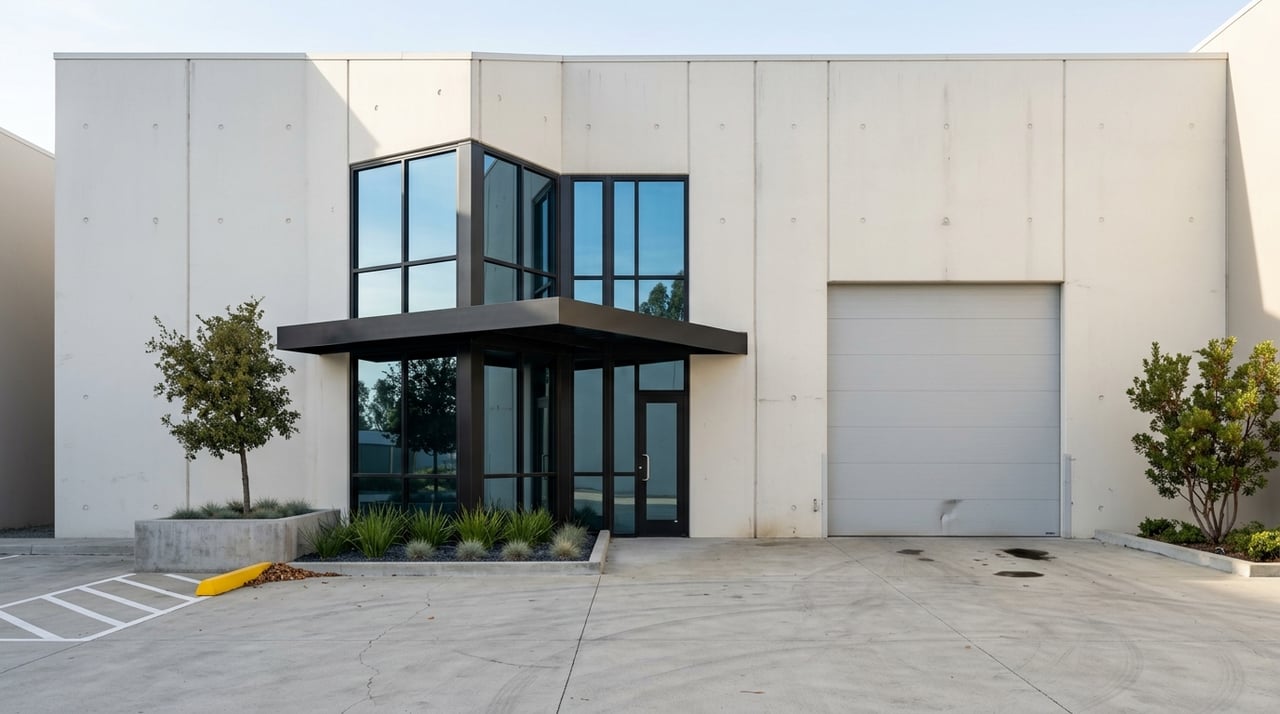
The city says it has more than 1,000 acres ready for commercial and industrial development, 1.6 million square feet of industrial space entitled since 2020, and more than 600,000 square feet of manufacturing facilities ready to occupy. It also points to projects such as Midway Commerce Center Building A, North Bay Logistics Center III, and Ascend Innovation Center.
That gives Vacaville a different feel than Fairfield. Instead of only offering existing industrial parks and built warehouse choices, it appears to pair current inventory with a stronger development pipeline and expansion runway.
Listing snapshots also suggest a wider pricing spread. Current examples ranged from about $3.00 to $8.40 per square foot per year for one larger block, while smaller or more finished spaces reached into the mid-to-high teens.
When Vacaville makes the most sense
Vacaville tends to fit best when your search is tied to biotech, advanced manufacturing, or flexible industrial use. It can also be appealing if your strategy depends on expansion land, entitled projects, or lower-cost flex and manufacturing options.
Vacaville may be the stronger match if you are looking for:
- Biotech or pharmaceutical manufacturing alignment
- Advanced manufacturing space
- Flex industrial product
- Expansion-oriented sites or development-ready opportunities
- Lower-entry pricing on selected flex or yard-oriented options
If your business needs room to grow or your investment thesis includes future development, Vacaville may offer advantages that Fairfield does not emphasize as strongly.
Fairfield vs. Vacaville side by side
| Factor | Fairfield | Vacaville |
|---|---|---|
| Market identity | Mature warehouse and distribution hub | Specialized growth corridor |
| Transportation profile | I-80, I-680, two rail lines, port access | I-80, I-505, rail, port and airport access |
| Inventory style | Deeper existing park network and built stock | Mix of existing space and development pipeline |
| Best-known strengths | Warehouse, logistics, general manufacturing | Biotech, advanced manufacturing, flex |
| Scale signal | 16.7M SF tracked industrial inventory | Stronger emphasis on entitled growth and ready development land |
| Pricing pattern | Sample listings clustered around mid-market annual rates | Wider spread from lower-cost blocks to mid-teen spaces |
How to choose the right city
The simplest way to decide is to match your business plan to the product each city appears to support best. Start with the property type you need today, then test whether your growth plan still works in that same submarket two to five years from now.
Choose Fairfield if you need the county’s deepest existing warehouse and logistics pool, a larger set of established industrial parks, and straightforward access tied to I-80 and I-680. That combination can help if timing, immediate occupancy, and proven industrial clustering matter most.
Choose Vacaville if you want a stronger biotech or advanced-manufacturing identity, more visible expansion potential, and a pipeline that includes entitled industrial product. That may be more attractive if your operation values specialization, future scaling, or flexible manufacturing-oriented options.
A note on rents and underwriting
Countywide averages are useful for setting expectations, but they should not drive your final numbers on their own. Reports from late 2025 show average direct asking rents below $1.00 per square foot per month NNN across the broader market, but the exact figure varies by source and sample.
The bigger issue is product mix. Warehouse, general industrial, flex, and R&D do not lease the same way, and Fairfield and Vacaville do not present the same inventory profile.
If you are underwriting a purchase or lease, it is smarter to compare building-specific comps, operating costs, and location fit than to lean too hard on one countywide average. That is especially true for investors evaluating value-add opportunities or 1031 exchange options across multiple Northern California submarkets.
Final takeaway
Fairfield and Vacaville can both work well for industrial buyers, tenants, and investors, but they solve different problems. Fairfield generally offers more immediate depth for warehouse, logistics, and established industrial park options, while Vacaville stands out for biotech, advanced manufacturing, and development-oriented growth.
If you are weighing a lease, acquisition, exchange, or portfolio move in Solano County, the right answer is usually the one that best fits your use case, timeline, and long-term strategy. A careful, property-level review can make that decision much clearer.
For discreet, senior-led guidance on industrial opportunities in Solano County and across Northern California, request a private consultation with The Elite Club.
FAQs
Is Fairfield or Vacaville better for warehouse space?
- Fairfield generally looks stronger for conventional warehouse and logistics space because it has a deeper existing industrial base, more established parks, and the county’s largest tracked industrial inventory.
Is Vacaville a good choice for manufacturing property?
- Vacaville may be a strong fit if you want advanced manufacturing, biotech, or pharmaceutical positioning, along with access to development-ready land and entitled industrial projects.
Are industrial rents lower in Fairfield or Vacaville?
- Sample listings suggest Fairfield has a more clustered mid-market range, while Vacaville shows a wider spread that includes some lower-cost flex or yard-oriented options and some higher-priced smaller spaces.
How much industrial vacancy is there in Solano County?
- Late-2025 brokerage reporting placed broader Solano and Napa county industrial vacancy in roughly the mid-8% range, though vacancy varies by product type such as warehouse, general industrial, and R&D.
Should investors compare county averages or building comps in Solano County?
- Building-specific comps are usually the better tool because county averages can hide major differences in product type, location, and operating profile between Fairfield and Vacaville.