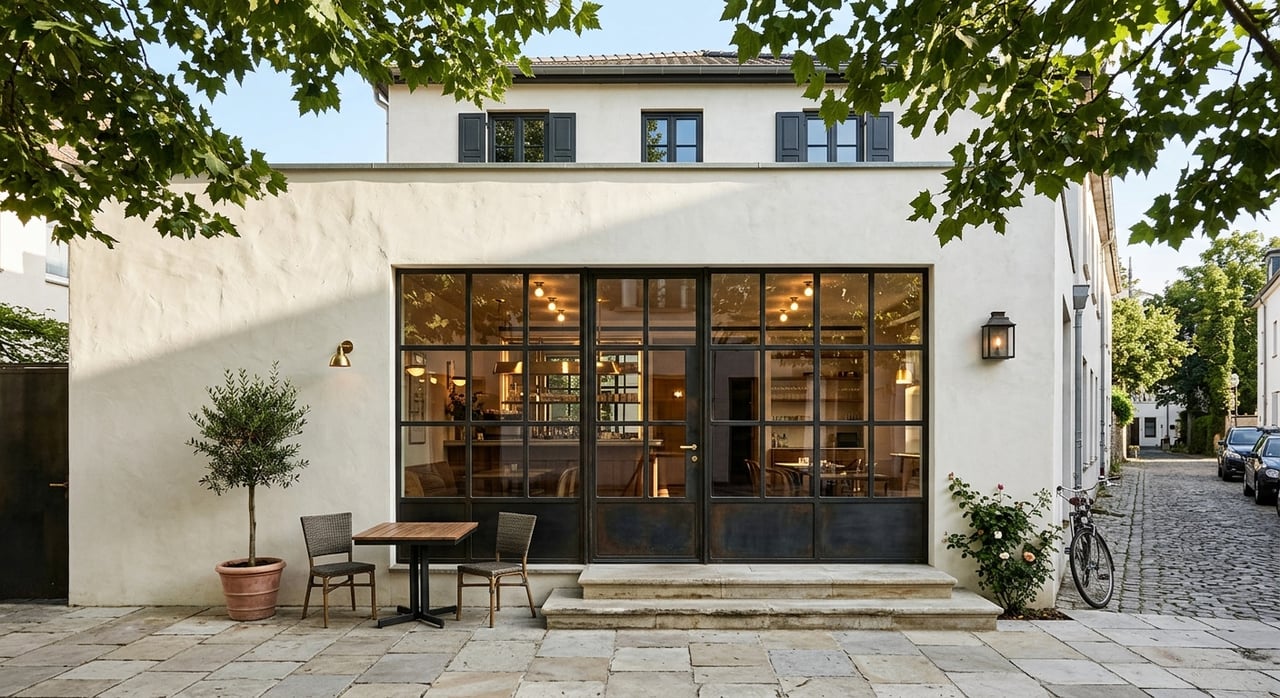
If you are looking at hospitality space in Yountville, the biggest question is not whether the town draws visitors. It does. The real question is how much that culinary reputation shapes where demand shows up, what kind of space performs best, and why certain blocks command a premium.
That matters whether you are leasing a tasting room, evaluating a boutique lodging opportunity, or positioning a restaurant-adjacent asset for sale. In Yountville, hospitality real estate is closely tied to dining, walkability, and the visitor experience. Here is what that means for owners, investors, and operators. Let’s dive in.
Yountville’s food scene drives demand
Yountville’s culinary standing is not just a branding line. The town describes itself as the Culinary Capital of the Napa Valley, and the current MICHELIN Yountville page lists 18 restaurants in Yountville and surrounding areas. That includes one three-star, one two-star, four one-star, four Bib Gourmand, and eight Selected Restaurants.
The best-known names cluster on Washington Street. The French Laundry is at 6640 Washington Street, Bouchon is at 6534 Washington Street, and Ad Hoc is at 6476 Washington Street. That concentration helps explain why Yountville’s hospitality space is tied so closely to destination traffic rather than purely local footfall.
The broader tourism picture supports that demand. Napa Valley’s 2023 visitor study reported 3.7 million visitors, more than $2.5 billion in local economic impact, and a 95% likelihood of return among visitors. The same reporting notes that 65% of Yountville’s general fund is supported by visitor-paid transient occupancy tax, which shows how central visitor activity is to the local economy.
Washington Street sets the premium
In Yountville, not all commercial locations play the same role. The town’s land-use framework makes that clear by concentrating the most permissive commercial designation on the west side of Washington Street and Highway 29. That designation allows visitor-oriented businesses, inns, new restaurants, professional offices, and live/work combinations.
The Old Town Commercial designation also applies to specific Washington Street frontages and is intended to create a distinct commercial district. The town identifies the west side of Washington Street between Humboldt and Mulberry as a pedestrian-oriented change area, and Old Town Commercial standards call for pedestrian pathways along Washington Street frontage.
For you as an owner or operator, that creates a simple hierarchy. Washington Street frontage offers the strongest position for visibility and discovery, especially for concepts that depend on walk-by interest. Spaces on side streets or transitional blocks may still work well, but they tend to fit uses that rely more on reservations, referrals, private clientele, or a planned visit.
Sip Yountville strengthens downtown traffic
The town’s newer Sip Yountville entertainment zone reinforces the same pattern. The zone runs along Washington Street between Champagne Drive and Jackson Street, with connected stretches along Yount Street and Finnell Road. Its purpose is to encourage visitors and locals to linger and explore downtown businesses.
That matters because hospitality value in Yountville is often tied to time spent in the district, not just raw traffic counts. When a town is designed to extend the guest experience, storefront exposure, outdoor activation, and arrival visibility all become more important.
If you are reviewing a leasing or acquisition opportunity, this suggests that central downtown space may benefit from both destination demand and a built-in framework that supports exploration. In a market like Yountville, that combination can be hard to replicate outside the core corridor.
Commercial supply stays limited
One reason Yountville space remains selective is simple: there is not much of it. According to the town’s land-use summary, commercial land uses account for 6.0% of total acres. Within that, Old Town Commercial totals 4.8 acres, Primary Commercial totals 25.4 acres, and Residential-Scaled Commercial totals 10.1 acres.
That limited footprint helps explain why public inventory appears thin. A LoopNet retail search showed only one retail-space listing for lease in Yountville, which is a useful signal of how scarce publicly marketed options can be.
Scarcity alone does not guarantee value, but it does create a more selective environment. In practical terms, that means buyers and tenants often need to weigh not just price, but also timing, off-market possibilities, and whether a particular space truly matches the intended concept.
Asking rents reflect the experience premium
Current asking examples on Washington Street show how the market prices central, hospitality-ready space. A listing at 6505 Washington Street offers 1,800 square feet approved for a tasting room and two offices at $60 per square foot per year triple net, or $108,000 annually.
Another example at 6484 Washington Street shows two smaller suites suitable for tasting room use at $4,863 per month and $2,700 per month. These are asking terms, not closed comparables, but they still show how Yountville space is marketed around wine, tasting, and culinary-adjacent uses.
Larger footprints are also rare. The Shops at The Marketplace at 6525 Washington Street is marketed as a historic retail building in the center of town with lease options ranging from 450 square feet to 6,500 square feet and a parking ratio of 1.91 per 1,000 square feet.
Experience matters more than generic retail
In Yountville, a basic storefront often is not enough. The strongest local models lean into experience, storytelling, and hybrid use. JCB Yountville is described as a tasting room and retail store that blends wine tasting with fashion, lifestyle, and retail. Jessup Cellars is presented as both an art gallery and tasting room, with food-pairing and al fresco elements.
That business mix says a lot about what the market rewards. Visitors are not just looking for a transaction. They are often looking for a memorable stop that fits into a broader day of dining, wine tasting, walking, and exploring.
For space planning, that can influence everything from layout to frontage design. A concept that creates visual interest, flexible gathering space, and a clear sense of identity may have a stronger fit than a commodity-style setup with little guest engagement.
Boutique lodging follows the same logic
Yountville’s lodging inventory also reflects this experience-first pattern. North Block emphasizes walkable access to Michelin-starred restaurants and tasting rooms. Bardessono combines a restaurant, bar, pool, and in-suite spa butler program, while Hotel Yountville includes an on-site restaurant, spa, meeting and event space, and 80 sleeping rooms.
At the same time, several local inns remain intentionally small. Maison Fleurie has 13 rooms, Lavender has 10 rooms, and Petit Logis Inn has 5 rooms. That tells you the market supports a boutique scale when the guest experience is clear and well-positioned.
For owners and investors, this can shape underwriting and repositioning decisions. In Yountville, smaller hospitality assets may compete on character, location, and integration with the culinary scene rather than on size alone.
What to evaluate before you lease or buy
If you are considering hospitality space in Yountville, a few factors deserve close attention.
Frontage and visibility
Washington Street frontage is the clearest choice for first-time discovery. If your concept depends on spontaneous walk-ins or strong street presence, this corridor likely offers the best fit.
Side-street locations can still work, but they may require a more appointment-driven model. Reservation-based uses, private tastings, club-oriented concepts, or quieter professional hospitality formats may align better there.
Parking and arrival
Even in a walkable town, arrival matters. Current listings promote parking as a selling point, and the town’s standards emphasize pedestrian pathways and walkability.
That means you should evaluate both car access and the guest journey from curb to entry. In hospitality, a clear and comfortable arrival experience can shape first impressions as much as the interior itself.
Concept fit
Yountville appears to reward hybrid uses. Tasting room plus retail, gallery plus hospitality, or restaurant plus lodging are all models reflected in the current market.
If your plan depends on a generic single-purpose layout, it may feel less aligned with what visitors expect here. A stronger concept usually offers more than one reason to step inside and stay longer.
Future flexibility
The General Plan allows housing above commercial and live/work combinations in the most permissive commercial areas. For some owners, that could create future flexibility in how an asset evolves over time.
That may be relevant if you are thinking beyond immediate occupancy and considering long-term repositioning, redevelopment, or a broader portfolio strategy.
Regulatory fit
Commercial areas near residential areas are designed to blend into the town fabric. Because of that, details like patio use, tenant improvements, operating hours, and noise management may matter as much as lease economics.
In a market that values both hospitality and town character, operational fit is part of real estate fit. It is worth evaluating early, before you commit to a space or business plan.
Why local guidance matters in Yountville
Yountville is a small market, but it is not a simple one. The most successful decisions often come from understanding how culinary reputation, zoning, public realm design, and limited supply interact with each other.
That is especially true when you are evaluating a mixed-use asset, a hospitality business sale tied to real estate, or a property that may appeal to both lifestyle buyers and investors. In those cases, pricing, positioning, and buyer outreach need to reflect both operational reality and long-term value.
A senior-led advisory approach can help you sort through those layers with more precision. In a market like Yountville, that clarity can make a real difference whether you are buying, leasing, selling, or planning your next move.
If you are weighing a hospitality, restaurant, tasting-room, or mixed-use opportunity in Yountville, The Elite Club offers private, senior-led guidance shaped by local market knowledge and commercial execution.
FAQs
How does Yountville’s culinary reputation affect hospitality real estate?
- Yountville’s dining reputation helps drive destination traffic, which supports demand for tasting rooms, boutique lodging, restaurants, and other visitor-oriented hospitality space.
Why is Washington Street important for Yountville hospitality space?
- Washington Street holds key commercial frontage, a concentration of notable restaurants, pedestrian-oriented planning, and the Sip Yountville zone, all of which support visibility and guest discovery.
Is hospitality space in Yountville limited?
- Yes. The town’s land-use summary shows a small commercial footprint overall, and publicly listed retail inventory can be very thin.
What types of hospitality concepts fit Yountville best?
- Current local examples suggest strong alignment for experiential and hybrid concepts, such as tasting room plus retail, gallery plus tasting, or boutique lodging tied to food and wine experiences.
What should you review before leasing hospitality space in Yountville?
- Focus on frontage, visibility, parking, arrival experience, concept fit, future flexibility, and whether the property’s operating profile aligns with the town’s commercial framework.